A Remnant, a Shield and a Promise: Why Bible Believers Still Stand With Israel
Israel as a nation has not received her Messiah. Yet God has kept a remnant there, used Israel to shield the West, and promised He is not finished. Here is the case from Scripture and history.
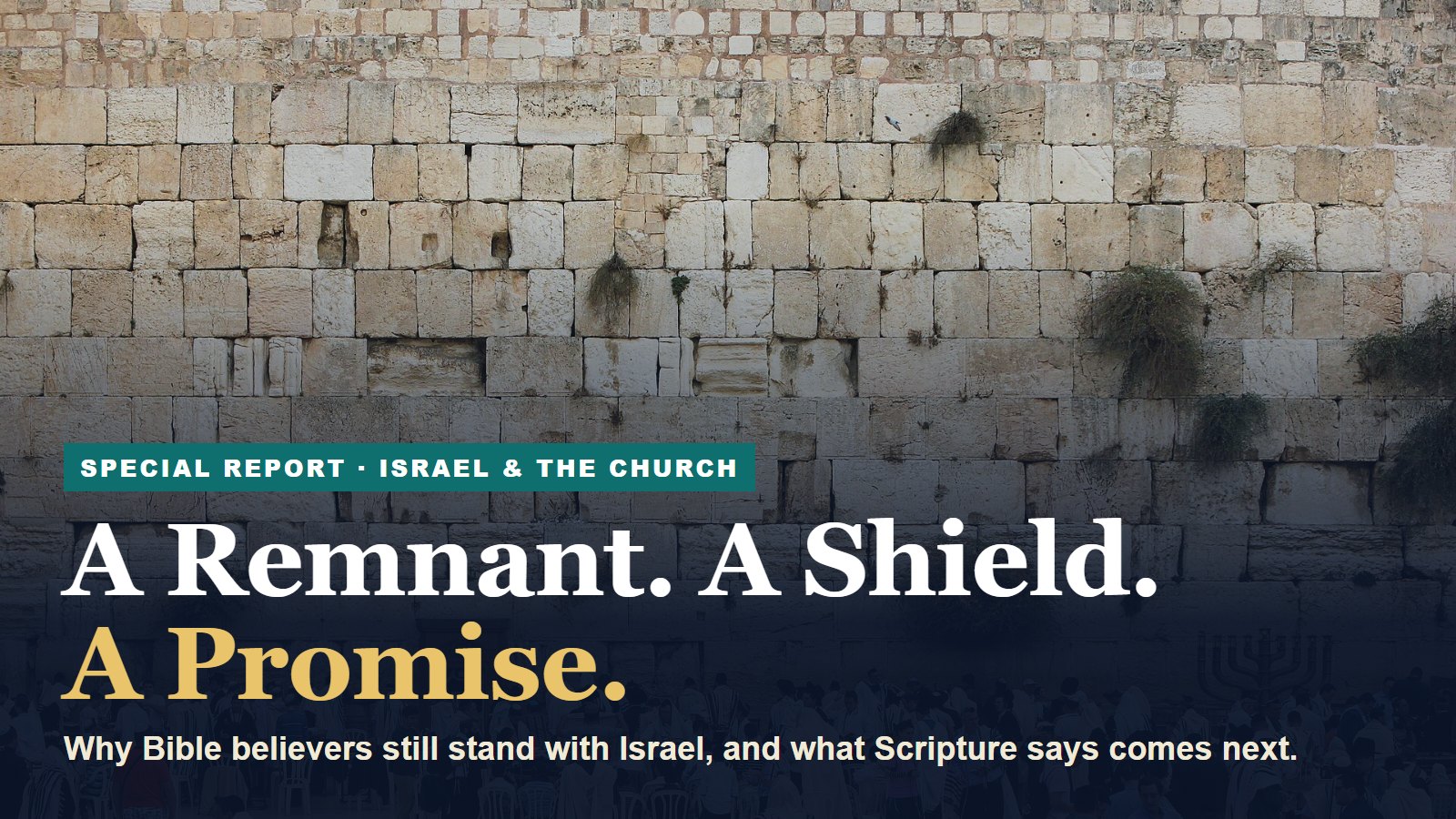 See where this is ›
JERUSALEM —
Say you support Israel today and someone will tell you that you are backing the wrong side. You will hear it on campuses, in the news, in some pulpits, and lately from voices on the political right as well as the left. Israel is cruel, they say. Israel is a burden. Christians who stand with it have been fooled.
This report answers that charge on three grounds, and it does not pretend Israel is something it is not. First, the spiritual truth: Israel as a nation is lost in unbelief, but God has kept a remnant. Second, the hard facts: Israel has been one of the West's most valuable shields, and the world would be far more dangerous without it. Third, the promise: God will deal with Israel again as a people, exactly as He said.
Along the way we take on replacement theology, the teaching that the church has permanently replaced Israel. We think it goes against God's word, against common sense, and against our own survival.
Part 1: Spiritually blind, but not cast away
Let us start where Israel's critics expect Christians to look away. Modern Israel is not a nation of believers. Most of its people do not believe Jesus is the Messiah. Many do not practice any faith. In a 2016 Pew Research Center survey, about half of Israel's Jews called themselves secular. Tel Aviv is known around the world for its nightlife and its Pride parade, not its prayer meetings.
How Israel's Jews describe themselves
SecularTraditionalReligiousUltra-Orthodox
Pew Research Center survey of Israeli Jews, published 2016. Hiloni = secular; Masorti = traditional; Dati = religious; Haredi = ultra-Orthodox.
None of this surprises a Bible reader. The prophets said worse about Israel than any modern critic. Moses told the people God was not giving them the land “for thy righteousness; for thou art a stiffnecked people” (Deuteronomy 9:6). Paul, a Jew himself, wept over his nation and said plainly that “blindness in part is happened to Israel” (Romans 11:25).
But Paul did not stop there, and neither should we. In the same chapter he holds two truths together that most people today pull apart:
“As concerning the gospel, they are enemies for your sakes: but as touching the election, they are beloved for the fathers' sakes. For the gifts and calling of God are without repentance.”
Romans 11:28-29
Enemies of the gospel, and beloved. Both at once. That is the key to the whole subject. A Christian can say that Israel's national spiritual condition is dark and still say God is not done with her. Paul did.
And there has always been a remnant. When Elijah thought he was the last faithful man in Israel, God told him, “Yet I have left me seven thousand in Israel, all the knees which have not bowed unto Baal” (1 Kings 19:18). Paul applied that very story to his own day: “Even so then at this present time also there is a remnant according to the election of grace” (Romans 11:5). Isaiah said the same: “Except the LORD of hosts had left unto us a very small remnant, we should have been as Sodom” (Isaiah 1:9).
That remnant is in the land today. Estimates of Jewish believers in Jesus living in Israel commonly run from about 15,000 to 30,000, in congregations from Haifa to Beersheba. Israel is also home to about 180,000 Christians, most of them Arabs, whose churches go back to the first centuries. Small numbers, yes. But the remnant was always small. “For they are not all Israel, which are of Israel” (Romans 9:6), and “a remnant shall be saved” (Romans 9:27).
So the first principle is simple. We do not stand with Israel because Israel is righteous. We stand with Israel because God has not let go of Israel, and because His remnant lives there now.
Part 2: The shield the West never thanks
Look at a map and the first thing you notice is how small Israel is. Before 1967 it was about nine miles wide at its narrowest point. Today it holds roughly 22,000 square kilometers, about the size of New Jersey, surrounded by 22 Arab League states and Iran with a combined land area more than 650 times larger and a population of more than half a billion.
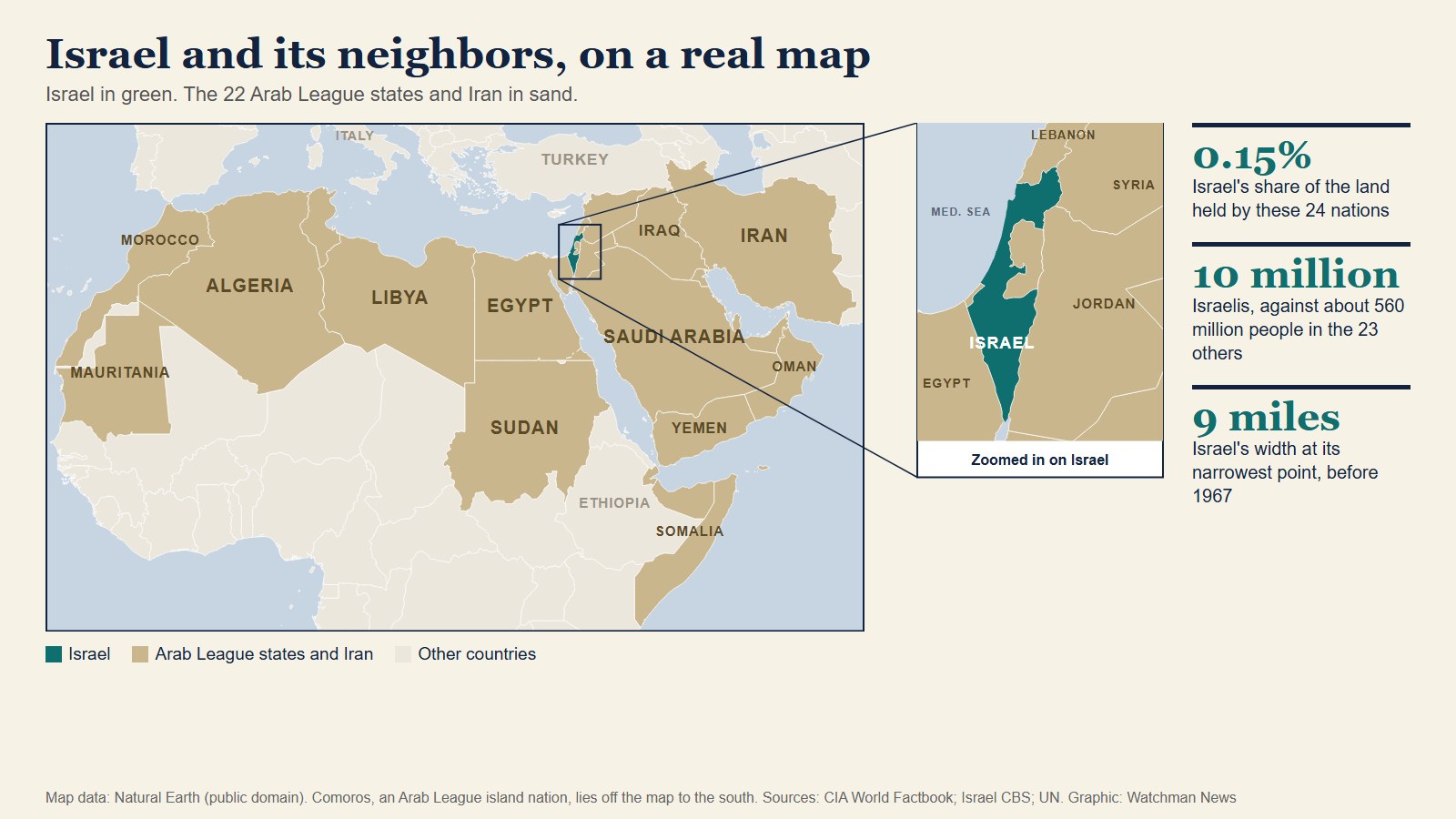
From that tiny strip, Israel has done more to protect America and Europe than most of our treaty allies. Much of this work was secret, and much of it was dangerous. Here are seven cases that are now on the public record.
Eight times Israel did the West's hard work
- 1956The speech that shook MoscowIsraeli intelligence obtained Khrushchev's secret speech denouncing Stalin and passed it to the CIA.
- 1966A MiG for AmericaAn Iraqi pilot defected with a Soviet MiG-21. Israel lent the jet to the U.S., which flew it in secret tests.
- 1967Six days in JuneFacing Egypt, Syria and Jordan, all armed by Moscow, Israel won in six days. Soviet prestige in the Arab world never recovered.
- 1970Jordan savedAt Washington's request, Israel mobilized as Syrian tanks rolled into Jordan. The Syrians pulled back.
- 1981OsirakIsraeli jets destroyed Saddam Hussein's French-built reactor near Baghdad.
- 2007Al-KibarIsrael destroyed a secret reactor that North Korea helped Syria build in the desert of Deir ez-Zor.
- 2018The nuclear archiveMossad agents carried tens of thousands of pages of Iran's nuclear weapons records out of a Tehran warehouse and shared them with the U.S.
- 2024The axis brokenExploding pagers, then strikes that killed Hezbollah's leader. Weeks later Assad's regime in Syria fell.
The Six-Day War of June 1967 deserves its own place in this story. In May of that year Egypt's President Gamal Abdel Nasser ordered the United Nations peacekeepers out of Sinai, closed the Straits of Tiran to Israeli shipping, and massed his army on Israel's border. Syria and Jordan joined him. Nasser told the world that the coming battle would be a general one and that the goal was Israel's destruction. All three armies were armed and trained by the Soviet Union.
On the morning of June 5, Israel's air force destroyed most of Egypt's air force on the ground within hours. Six days later Israel held the Sinai, Gaza, the Golan Heights, Judea and Samaria, and all of Jerusalem. For the first time since 1948, Jews could pray at the Western Wall. Many Bible believers remembered the Lord's words that Jerusalem would be trodden down of the Gentiles “until the times of the Gentiles be fulfilled” (Luke 21:24).
For the West, the results reached far past Jerusalem. Nasser's pan-Arab movement, Moscow's best hope in the region, was shattered. Within five years his successor, Anwar Sadat, expelled thousands of Soviet military advisers from Egypt. By 1979 Egypt had signed a peace treaty with Israel after the Camp David talks and moved into the American camp, where it has stayed. The largest Arab nation changed sides in the Cold War because Israel would not lose.
Two of these deserve a closer look, because they show what the world would look like without Israel.
In June 1981, Israeli jets destroyed the Osirak reactor near Baghdad. The United States condemned the strike at the United Nations. Ten years later, Saddam Hussein invaded Kuwait and American troops went to war against him. After that war, Defense Secretary Dick Cheney gave the Israeli general who planned the raid a satellite photo of the ruins, inscribed with thanks for the job he did in 1981, “which made our job much easier in Desert Storm.” Imagine half a million American troops facing an Iraq that had a bomb.
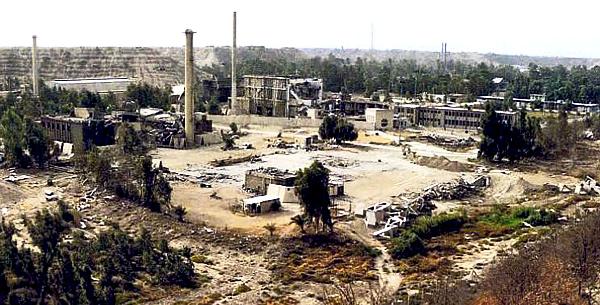
In September 2007, Israel destroyed a reactor that North Korea had helped Syria build in secret at al-Kibar, in the desert province of Deir ez-Zor. Seven years later, ISIS swept across that same province. Had the reactor been finished, a terror army that beheaded Americans on video would have camped beside nuclear material.
The pattern runs right up to the present. In 2024, Israel turned Hezbollah's own pagers into weapons and then killed its longtime leader, Hassan Nasrallah. Hezbollah had been the strongest arm of Iran's alliance and the guardian of Syria's Assad regime. With Hezbollah broken, Assad's government collapsed in December 2024. In June 2025, Israel struck Iran's nuclear and missile sites, and the United States joined with its own bombers. This year the two nations went to war with Iran together again, beginning Feb. 28, as Watchman News has reported.
Iran's attack on Israel, April 13-14, 2024
99 in 100 stopped1 got through
Iran launched more than 300 drones and missiles. Israel, the U.S., Britain, France and Jordan shot them down together. Interception rate as reported by the Israel Defense Forces.
This is the point most critics miss. The Middle East has always had men who dreamed of uniting its nations against the West: Nasser's pan-Arab union in the 1950s and 60s, Saddam's ambitions, and now Iran's “Axis of Resistance” running from Tehran through Iraq, Syria and Lebanon to Gaza and Yemen. Israel has been the wrench in every one of those machines. Its spies find the plans. Its pilots destroy the weapons. Its operations kill the commanders and expose the networks. Its victories shame the dictators who promised to destroy it.
The Psalmist described this kind of alliance three thousand years ago: “They have said, Come, and let us cut them off from being a nation; that the name of Israel may be no more in remembrance. For they have consulted together with one consent: they are confederate against thee” (Psalm 83:4-5).
Some say American support for Israel is the reason these enemies hate us. But the regime in Tehran calls America the “Great Satan” and Israel only the “Little Satan.” Removing the smaller one would not make peace with the larger. It would simply remove the nation that stands between them and us.
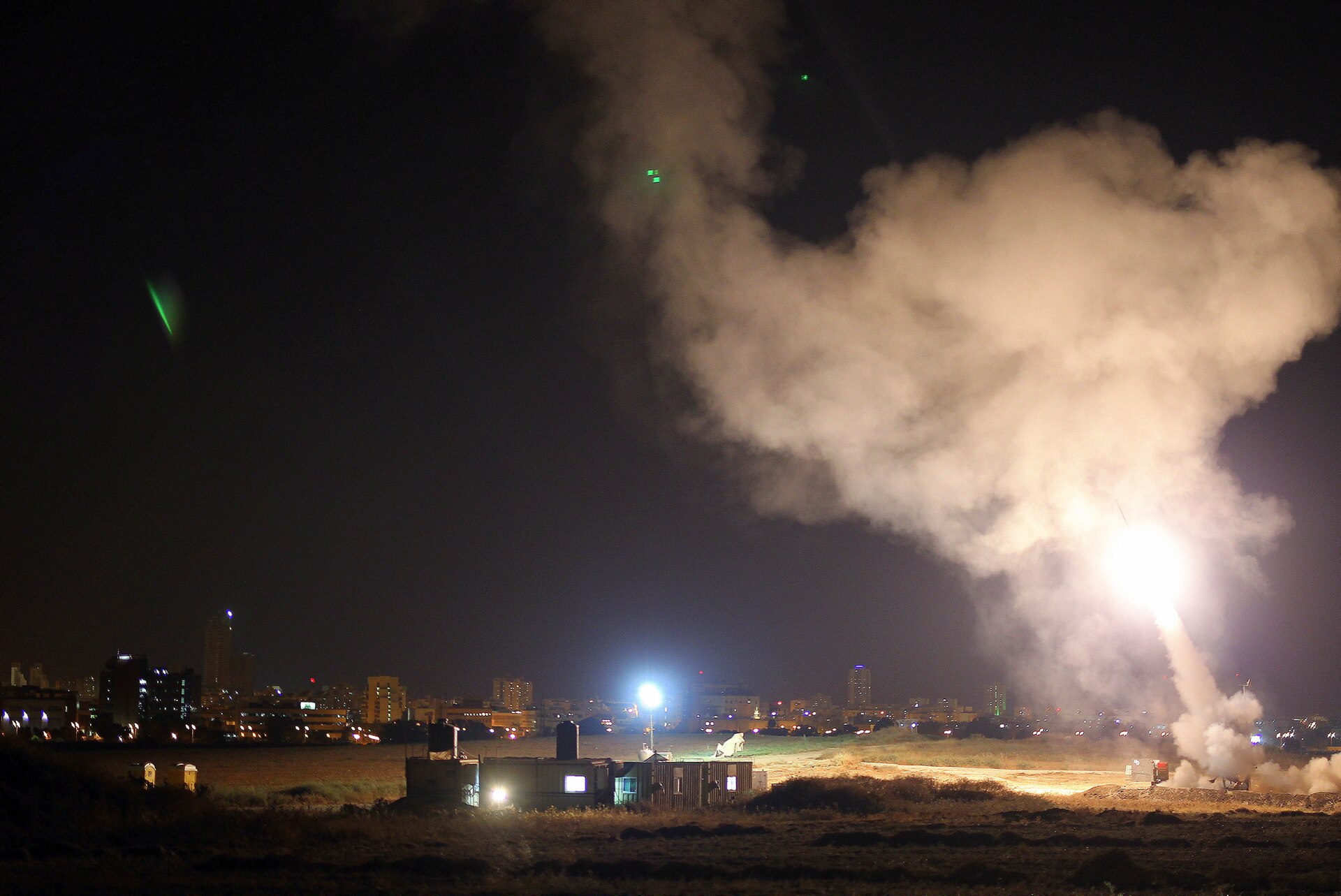
And the cost to America has been small next to the return. U.S. military aid has run about $3.8 billion a year under a 10-year agreement that began in 2019, much of it spent buying American-made weapons. That is less than half of one percent of the U.S. defense budget. Israel's own leaders have said they want that aid to reach zero, and on Nov. 3 President Trump said it will end, with arms sales continuing. However that turns out, the partnership has never been charity. Israel's wars have tested American weapons, and its intelligence has protected American lives.
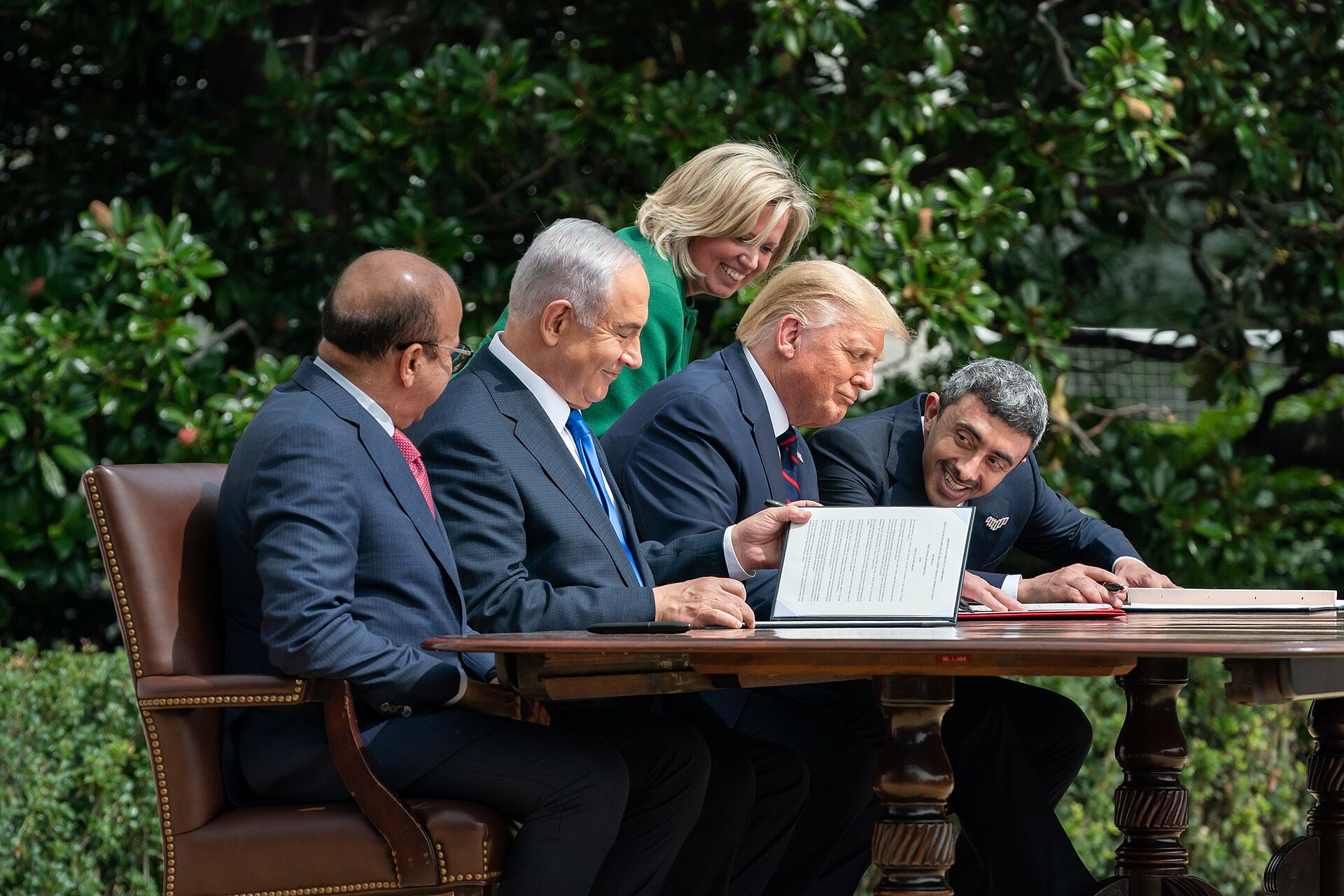
Israel's shield has also opened doors to peace. In 2020 the Abraham Accords brought the United Arab Emirates and Bahrain into open peace with Israel, followed by Morocco and Sudan. Arab nations did not make peace with Israel because it was weak. They made peace because it was strong, and because they fear Iran more.
What if there had been no Israel?
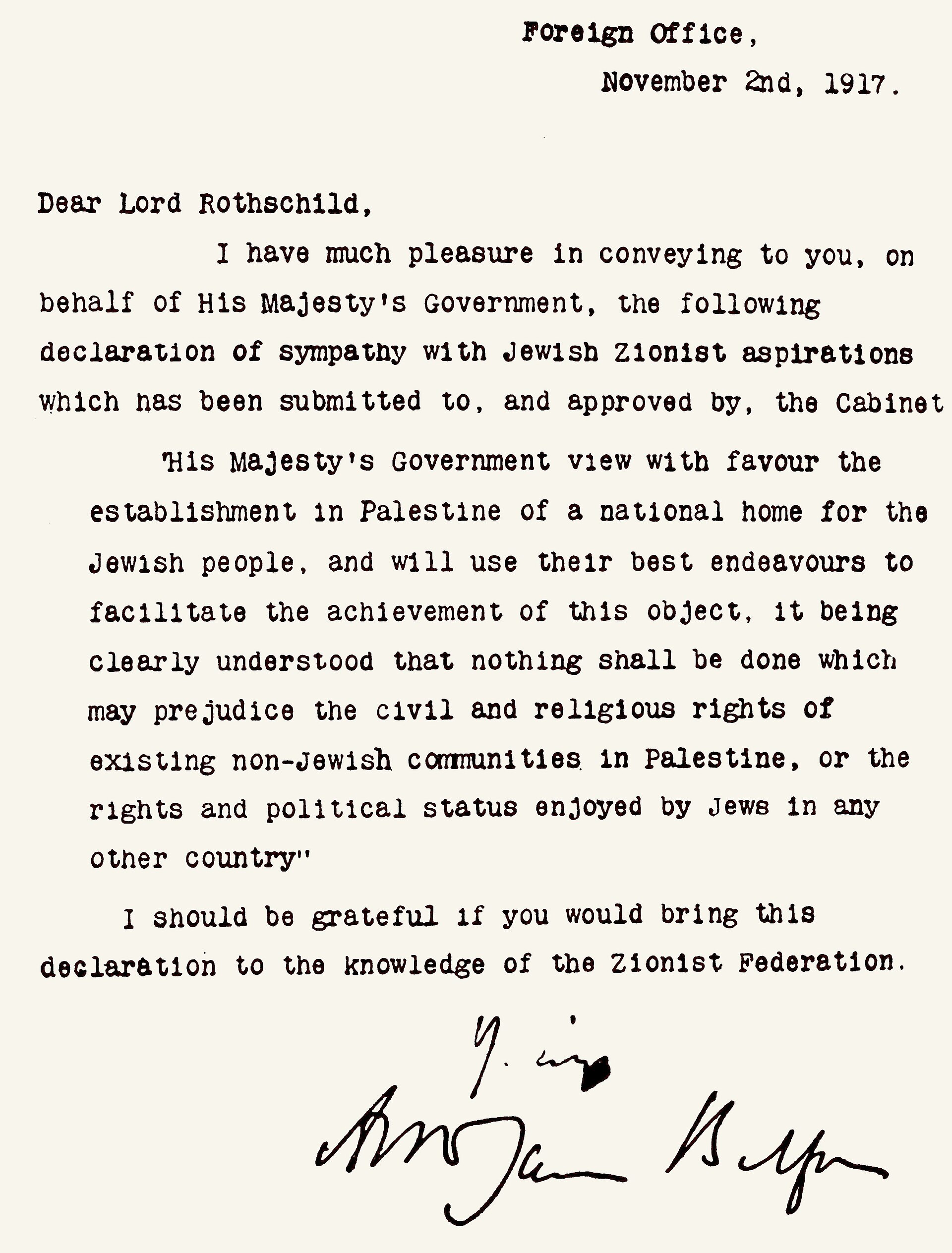
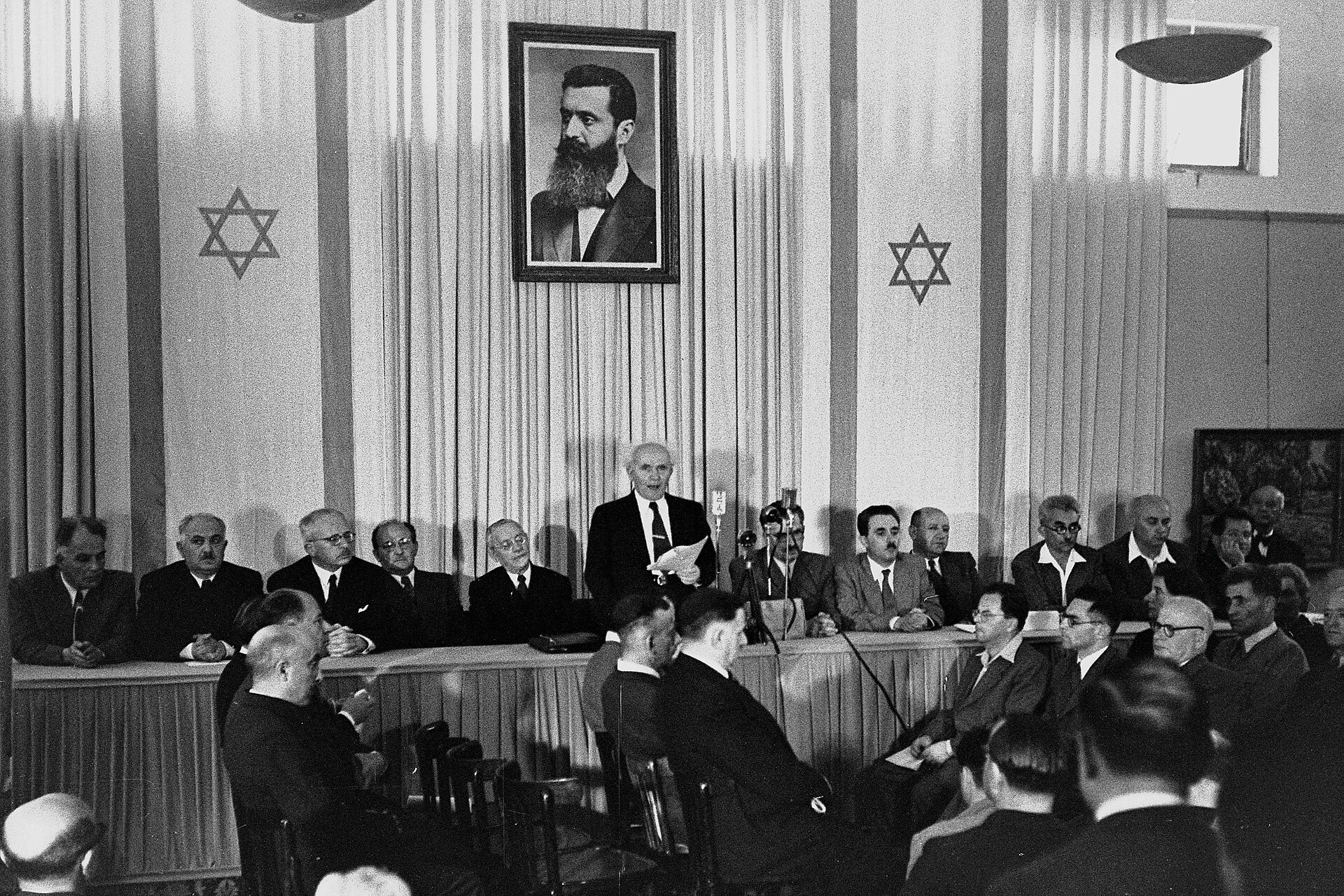
History has a turning point. In November 1917, during World War I, Britain issued the Balfour Declaration, promising “a national home for the Jewish people” in Palestine. After the war the League of Nations gave Britain the mandate to carry it out. On May 14, 1948, David Ben-Gurion declared the State of Israel, and five Arab armies invaded the next day.
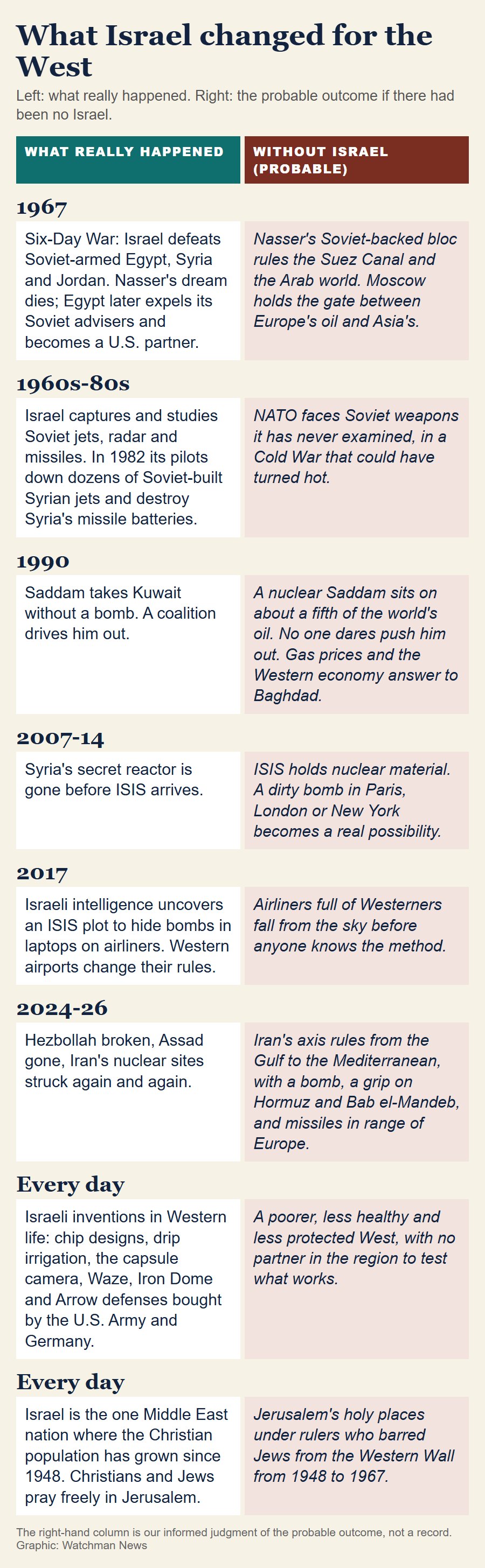
Now imagine that the door had stayed shut. No national home after World War I. No state in 1948. No Israeli air force in 1967, no Israeli pilots over Baghdad in 1981 or over Syria in 2007, no Mossad in Tehran in 2018. This is a scenario, not a record. But each step follows from what we know, and it is not a pleasant walk.
- The refugees. Britain had already limited Jewish immigration to Palestine in 1939. With no Jewish homeland, more of Europe's Jews have nowhere to run from Hitler. After 1948, about 850,000 Jews pushed out of Arab and Muslim lands have no single refuge either.
- The Cold War tilts. With no Israeli army to beat them in 1967 and 1973, Nasser's Soviet-armed bloc keeps its momentum. Moscow gains a stronger hold on the Suez Canal, the shortcut between Europe's factories and Asia's oil. NATO goes through the 1970s and 80s without ever having studied the Soviet jets, radars and missiles that Israel captured and tested.
- The oil weapon gets teeth. In 1990 Saddam Hussein takes Kuwait, as he did. But in this history he kept his reactor, and he has the bomb or is close to it. Iraq and Kuwait together hold about a fifth of the world's proven oil. No American president sends half a million troops against a nuclear dictator. Saddam sets the price of gasoline in Indiana.
- Terror goes nuclear. Syria finishes its reactor. In 2014 ISIS overruns the province around it. A terror army that burned a captured pilot alive and beheaded Americans on video now sits beside nuclear material, with followers already living in Paris, Brussels and London.
- The airliners. In 2017 Israeli intelligence uncovered an ISIS plan to hide bombs in laptops carried onto passenger jets, and Western governments changed their airport rules. In this history no one is watching from inside the network. The first warning is wreckage.
- Today. Iran's revolution and its “Axis of Resistance” face no one inside the region able or willing to break them. Hezbollah, never crippled, still guards Assad in Damascus. Iran finishes a bomb, holds the Strait of Hormuz, through which about a fifth of the world's oil passes, and through the Houthis holds the Bab el-Mandeb at the mouth of the Red Sea. Its missiles reach Europe. America faces it alone.
Put the six together and the picture is plain. Without Israel, the West would have fought the Cold War with a weaker hand, paid for oil at a dictator's price, lived under the threat of nuclear terror, and faced a nuclear Iranian bloc with no one in the region to stand in the gap. In plain words, we would be cooked.
Critics will answer that Israel's existence is what united the Arab world against the West in the first place. There is some truth in that complaint, and it should be heard. But it does not hold up. Arab unity collapsed again and again on its own rivalries, and the most dangerous threats of our time, Iran's revolution and the jihadist movements, came from ideas that hate the West for its own sake. Israel was never their only target. It was simply the nearest one.
Part 3: The lengths Israel goes to protect life
No honest report can skip Gaza. The war that began with Hamas's attack on Oct. 7, 2023, when about 1,200 people were killed in Israel and 251 taken hostage, became one of the most destructive urban wars of our time. The Hamas-run Health Ministry in Gaza reported more than 68,000 deaths by the October 2025 ceasefire. That figure does not separate fighters from civilians, and it cannot be checked independently. Many thousands of the dead were Hamas and other fighters. Either way, the grief is real, and Christians should feel it.
But the question asked by Israel's critics is whether Israel is careless with human life. The record says Israel took steps few armies in history have taken, against an enemy that did the opposite.
What Israel did to warn civilians in Gaza
- CallsPhone calls and textsRecorded and live calls and text messages telling people in a target area to leave.
- PaperLeafletsMillions of leaflets dropped with evacuation routes and times.
- MapsA numbered gridIn December 2023 Israel published a map dividing Gaza into hundreds of numbered blocks so evacuation orders could be narrow.
- ZonesHumanitarian areasDesignated safe areas such as al-Mawasi on the coast, with announced routes south.
- PausesDaily pausesAnnounced breaks in fighting along aid routes and in populated areas.
Hamas built hundreds of miles of tunnels under Gaza, with entrances in homes, mosques and schools, and U.S. intelligence said it used Gaza's largest hospital, al-Shifa, as a command center. A senior Hamas official said in October 2023 that the tunnels were built to protect fighters, and that protecting civilians was the job of the United Nations. Israel built bomb shelters and the Iron Dome to protect its children. Hamas built tunnels to protect its rockets.
John Spencer, chair of urban warfare studies at West Point's Modern War Institute, studied the war closely and concluded that Israel took more measures to prevent civilian harm than any army before it, beyond what the law of war requires. For comparison, when the U.S.-led coalition and Iraqi forces took Mosul back from ISIS in 2016-17, the Associated Press counted roughly 9,000 to 11,000 civilians killed in about nine months.
Feeding the enemy's people
Food is the other test of how a nation fights. For most of history, armies have used hunger as a weapon. Britain's blockade of Germany in World War I let no food through, and German officials counted hundreds of thousands of civilian dead. Hitler's army sealed Leningrad to starve it out. Nigeria cut off food to Biafra in 1967-70. Assad's forces in Syria besieged towns under the slogan “kneel or starve.” A Saudi-led blockade helped push Yemen toward famine.
Israel did something different. While fighting an enemy that had just murdered 1,200 of its people and still held its hostages, it let food into the territory that enemy ruled, through its own border crossings. More than 1.9 million tons of aid entered Gaza by August 2025, about 1.3 million tons of it food, on more than 106,000 trucks by that September. In the ceasefire that followed, about 1.78 million more tons of food went in over eight months, roughly half of it humanitarian aid and half commercial goods. Israel is the most watched nation on earth. Every truck that crosses its border is counted, filmed and argued over by reporters, the UN and its enemies. Its numbers can be trusted.
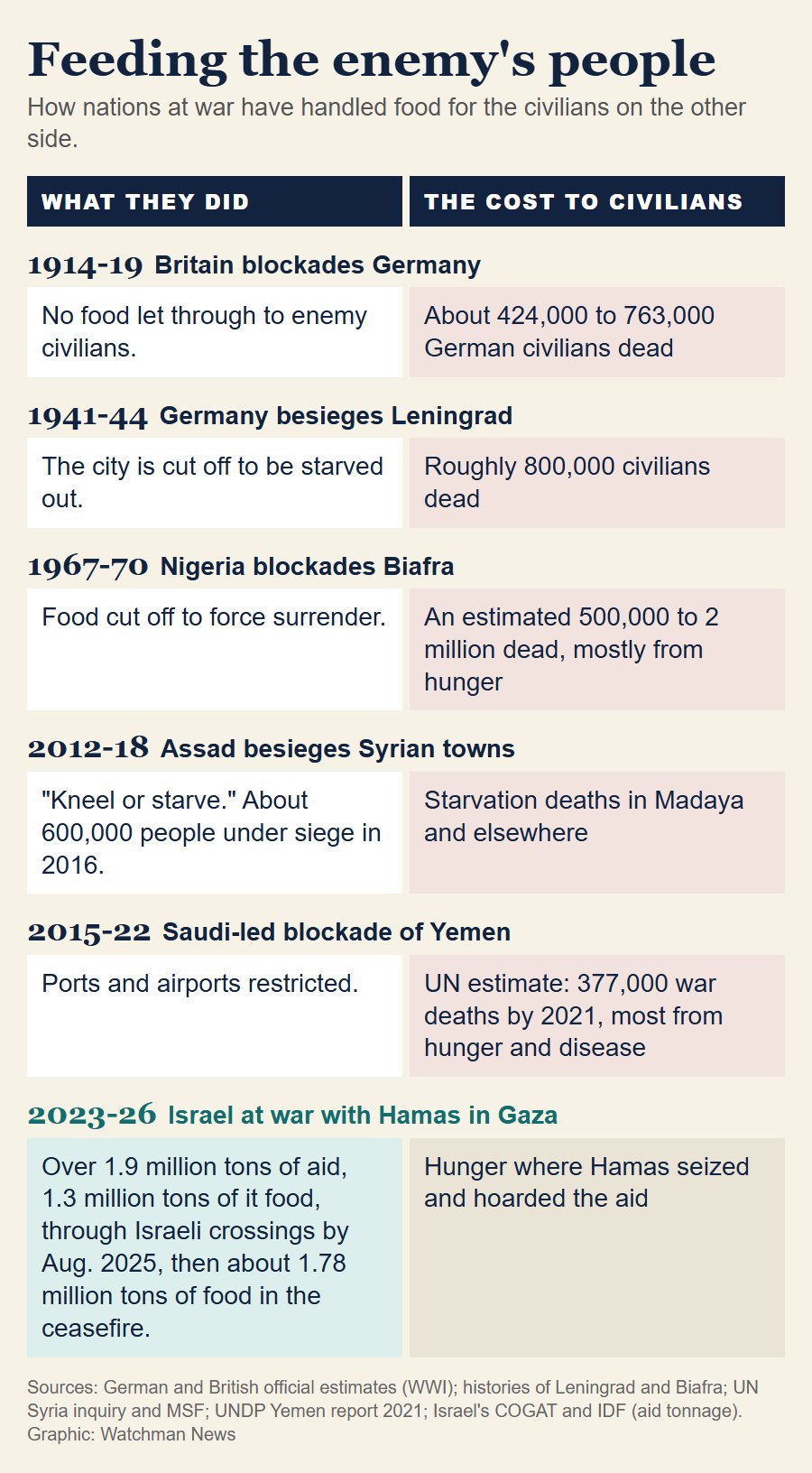
So why the reports of hunger? Because Hamas took the food. Its gunmen seized aid trucks, stockpiled supplies for its fighters and tunnels, and sold the rest to its own people at black-market prices. Israel paused aid for eleven weeks in the spring of 2025 to press Hamas to free the hostages, and it set up new distribution sites to get food to families without passing through Hamas hands. The food was there. The people who ruled Gaza kept it from the hungry. Set beside the history of war, one fact stands: few nations have ever fed the people of the enemy they were fighting. Israel did, on a massive scale.
Israel's critics, including UN agencies, human rights groups and the International Criminal Court, have accused it of failing to protect civilians and of holding back aid. The record above answers them. A Christian can grieve every innocent death in Gaza and still say clearly who started this war, who hid behind children, and who sent warnings before it struck.

Part 4: God will deal with Israel again
The third principle is the one that matters most, because it rests on God's own word. The Bible says God will deal with Israel again as a people, and it tells us the order in which He will do it.
Read Ezekiel 36 closely. God says first, “For I will take you from among the heathen, and gather you out of all countries, and will bring you into your own land.” Only after that does He say, “Then will I sprinkle clean water upon you, and ye shall be clean ... A new heart also will I give you, and a new spirit will I put within you” (Ezekiel 36:24-26).
The gathering comes first. The new heart comes after. That is exactly what we see today: a nation back in its land, still in unbelief. And God tells us why He does it: “I do not this for your sakes, O house of Israel, but for mine holy name's sake” (Ezekiel 36:22). The restoration is about God keeping His word, not Israel earning it. That ties all three of our principles together.
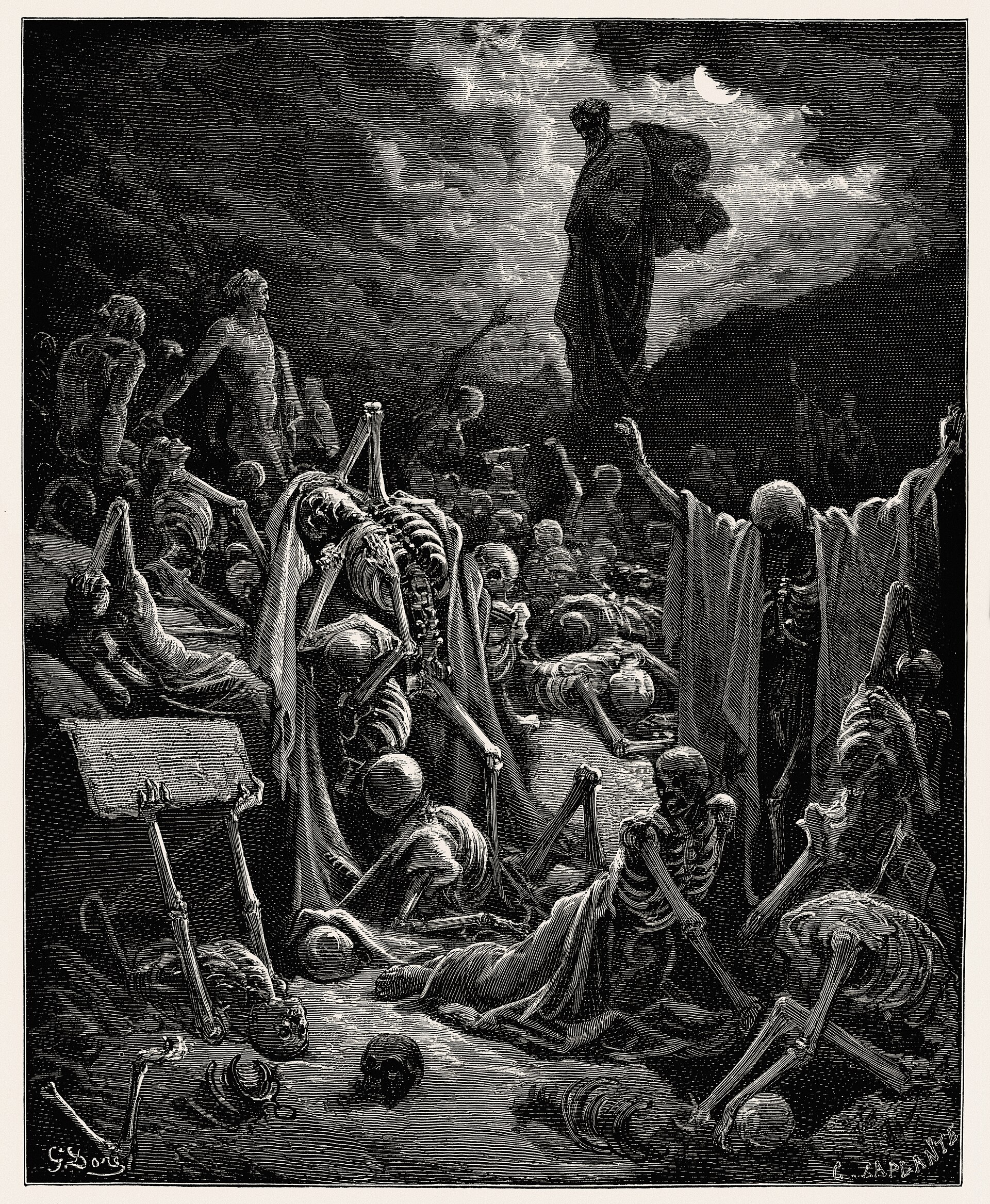
Ezekiel 37 paints the same picture. The dry bones come together, sinews and flesh cover them, “but there was no breath in them” (Ezekiel 37:8). The breath comes later. “These bones are the whole house of Israel” (Ezekiel 37:11).
Then comes the fire. Jeremiah calls it “the time of Jacob's trouble; but he shall be saved out of it” (Jeremiah 30:7). Zechariah says two parts in the land will be cut off and the third part brought “through the fire” and refined like silver (Zechariah 13:8-9). Jesus said it will be “immediately after the tribulation of those days” that the sign of the Son of man appears and His angels gather His elect with a great sound of a trumpet (Matthew 24:29-31).
And then the moment the whole story has been moving toward: “They shall look upon me whom they have pierced, and they shall mourn for him, as one mourneth for his only son” (Zechariah 12:10). Jesus told Jerusalem, “Ye shall not see me henceforth, till ye shall say, Blessed is he that cometh in the name of the Lord” (Matthew 23:39). Paul finished the thought: “And so all Israel shall be saved” (Romans 11:26).
God's order for Israel, in His own words
- 1Scattered"Jerusalem shall be trodden down of the Gentiles, until the times of the Gentiles be fulfilled." (Luke 21:24)
- 2Gathered, still in unbelief"I will take you from among the heathen ... and will bring you into your own land." (Ezekiel 36:24) Breath comes later (Ezekiel 37:8).
- 3Jacob's trouble"It is even the time of Jacob's trouble; but he shall be saved out of it." (Jeremiah 30:7)
- 4Refined"I will bring the third part through the fire, and will refine them as silver is refined." (Zechariah 13:9)
- 5They look on Him"They shall look upon me whom they have pierced, and they shall mourn for him." (Zechariah 12:10; Revelation 1:7)
- 6All Israel saved"There shall come out of Sion the Deliverer, and shall turn away ungodliness from Jacob." (Romans 11:26)
- 7Planted for good"They shall no more be pulled up out of their land which I have given them." (Amos 9:15)
Hosea saw it centuries before Christ. Israel would live “many days without a king, and without a prince, and without a sacrifice.” Then: “Afterward shall the children of Israel return, and seek the LORD their God, and David their king; and shall fear the LORD and his goodness in the latter days” (Hosea 3:4-5). We have watched the first half of that come true for nearly two thousand years. We have every reason to expect the second.
Why replacement theology fails
Replacement theology, also called supersessionism, teaches that because Israel rejected Christ, the church has taken its place for good, and that God's promises to Israel now belong only to the church in a spiritual sense. It is old. Justin Martyr in the second century called the church the “true spiritual Israel.” John Chrysostom preached eight sermons against the Jews in Antioch in 386 and 387. Martin Luther, late in life, wrote On the Jews and Their Lies in 1543, a book later used by Nazi propagandists. Many sincere believers today hold softer forms of the idea. But it fails on three counts.
Against God's word
Paul asked the question directly: “Hath God cast away his people? God forbid” (Romans 11:1). He warned Gentile believers not to boast against the natural branches, “thou bearest not the root, but the root thee” (Romans 11:18). And God tied Israel's survival to the sun, moon and stars: “If those ordinances depart from before me, saith the LORD, then the seed of Israel also shall cease from being a nation before me for ever” (Jeremiah 31:35-36). The sun came up this morning.
There is a deeper problem. If God could break His unconditional promises to Israel because of their sin, what security does the church have in His promises to us? Paul's answer is that God's calling is “without repentance.” He does not take it back. That is good news for Israel, and it is good news for every Gentile saved by grace.
Replacement theology against the Book
- Claim"God is finished with Israel.""Hath God cast away his people? God forbid." (Romans 11:1)
- Claim"Israel forfeited the promises.""The gifts and calling of God are without repentance." (Romans 11:29)
- Claim"The church is the new Israel.""Boast not against the branches ... the root thee." (Romans 11:18)
- Claim"The land promises were only symbols.""If those ordinances depart from before me ... then the seed of Israel also shall cease from being a nation." (Jeremiah 31:36)
- Claim"1948 was just politics.""The Lord shall set his hand again the second time to recover the remnant of his people." (Isaiah 11:11)
Against common sense
No other people has been scattered for nearly two thousand years and then come back to the same land, with the same name, speaking a revived form of the same language. Jerusalem fell to Rome in A.D. 70. Israel was declared a nation again in 1948, 1,878 years later, in a single day. “Shall a nation be born at once?” Isaiah asked (Isaiah 66:8). Jews returned from more than a hundred countries, just as Isaiah said the Lord would gather them “from the four corners of the earth” the “second time” (Isaiah 11:11-12).
Replacement theology has no place for any of this. It has to call the most remarkable national resurrection in history a coincidence. Even the disciples, after forty days of teaching from the risen Christ, asked, “Lord, wilt thou at this time restore again the kingdom to Israel?” Jesus did not tell them the idea was wrong. He told them the timing was the Father's (Acts 1:6-7).
Against our own survival
Ideas have consequences. Where replacement theology spreads, churches start to treat the Jewish state as illegitimate, and that view does not stay in seminaries. In 2014 the Presbyterian Church (U.S.A.) voted to divest from three American companies over their business with Israel. Church activism against Israel has fed campaigns to boycott, isolate and disarm the one nation in the region that has consistently fought the West's enemies.
If the church persuades America to abandon Israel, it will not bring peace. It will hand the Middle East to the alliances Israel has spent 75 years breaking up. A theology that ends with Iran's axis whole and America's best partner gone is not only wrong about the Bible. It is dangerous.
What this means for a Bible believer
Standing with Israel does not mean cheering every decision of its government. The prophets rebuked Israel's kings, and Christians may disagree with Israel's leaders, who are themselves in a season of change after the Oct. 27 election. It does not mean hating Arabs or Palestinians, many of whom are our brothers and sisters in Christ, and all of whom are souls Jesus died for.
It does mean taking God at His word. “I will bless them that bless thee, and curse him that curseth thee” (Genesis 12:3) has never been withdrawn. It means praying as David told us to: “Pray for the peace of Jerusalem: they shall prosper that love thee” (Psalm 122:6). It means sharing the gospel, which is “the power of God unto salvation to every one that believeth; to the Jew first, and also to the Greek” (Romans 1:16). And it means watching, because the same Bible that told us Israel would be gathered tells us what comes next.
Israel is spiritually blind, yet loved. It is a shield the West has rarely thanked. And it is a promise God has not forgotten. The remnant is there. The Deliverer is coming. “Even so, Amen” (Revelation 1:7).
Sources consulted tap to open
- Scripture quotations are from the King James Version.
- Pew Research Center, “Israel's Religiously Divided Society,” March 8, 2016.
- Israel Central Bureau of Statistics population figures, including Christians in Israel; CIA World Factbook land areas.
- Reference histories of the Khrushchev secret speech (1956), Operation Diamond (1966), Black September in Jordan (1970), Operation Opera (1981) and the al-Kibar strike (2007).
- Reporting on the 2018 Mossad seizure of Iran's nuclear archive, the 2024 Lebanon pager attacks, the April 2024 Iranian strikes on Israel and the June 2025 Israel-Iran war.
- Watchman News reporting on the 2026 Iran war and the Nov. 3, 2026 U.S. aid announcement (Associated Press, Times of Israel).
- Associated Press investigation of civilian deaths in Mosul, December 2017.
- John Spencer, Modern War Institute at West Point, writings on civilian-harm measures in Gaza, 2024.
- Gaza Health Ministry casualty totals as reported by international news agencies at the October 2025 ceasefire.
- Reference histories of supersessionism, Justin Martyr's Dialogue with Trypho, John Chrysostom's Adversus Judaeos, and Luther's 1543 treatise.
- Presbyterian Church (U.S.A.) General Assembly divestment vote, June 2014.
- COGAT and Israel Defense Forces aid figures (1.9 million tons as of Aug. 19, 2025; COGAT ceasefire report covering Oct. 10, 2025-June 7, 2026); Israel Foreign Ministry truck count, Sept. 2025.
- Reference histories of the WWI blockade of Germany, the siege of Leningrad and the Nigerian civil war; UN Commission of Inquiry on Syria and Doctors Without Borders on Madaya (2016); UNDP report on the war in Yemen (2021).
- Reference histories of the Six-Day War (1967), the expulsion of Soviet advisers from Egypt (1972) and the Egypt-Israel peace treaty (1979).
- Reporting on the 2017 laptop-bomb plot, the U.S. Army's Iron Dome purchase (2019) and Germany's Arrow 3 purchase (2023).